

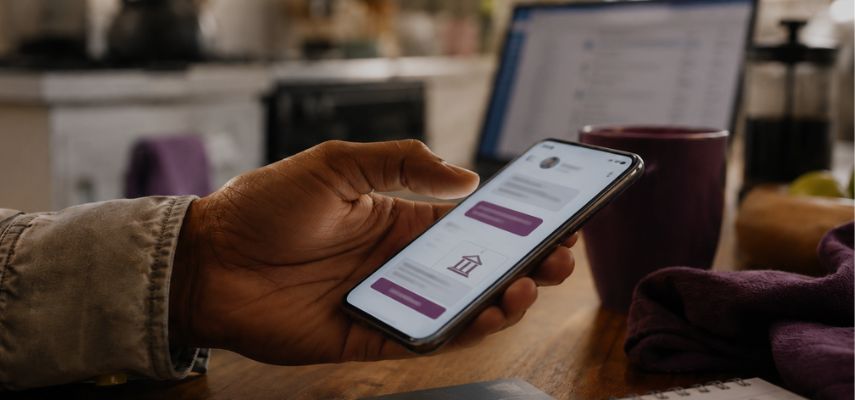
A supplier emails you with new banking details. The email address looks right. The signature looks right. The amount matches the invoice you were expecting. You pay it. And the money is gone.
This is not a hypothetical. It is happening to South African businesses and families every week. And in 2026, it is happening more often, more convincingly, and with less warning than before.
What has changed
Cybercrime used to look obvious. Misspelled subject lines. Strange links. A clearly foreign sender. Now it looks ordinary.
The threats reaching our clients are not the ones in the news. They look like routine business. A supplier who has supposedly changed banks. A manager is asking for an urgent payment. A voice note that sounds exactly like someone you know.
That last one is the real shift. Criminals now use artificial intelligence to copy a familiar voice, a writing style, or a company email almost perfectly. The message feels normal because it is built to.
SABRIC estimates that cybercrime costs South Africa around R2.2 billion a year, and INTERPOL continues to rank the country among the most targeted in Africa. Most of that loss does not come from a technical break-in. It comes from a convincing message and a busy moment.
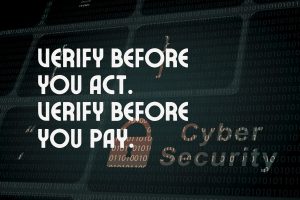
The technology has moved on. The protection that works has not. It still starts with one habit. Verify before you act. Verify before you pay. Every time.
If you take one thing from this piece, take this.
Before you act on any payment instruction that arrives by email, SMS, WhatsApp, or voice note, verify it through a different channel.
- Confirm using a different contact method. If the request came by email or phone
- Use the contact details you already have on file. Not the ones in the message
- Verify bank account details through your bank’s verification service
- Check that the sender address is the exact one you have used before, not a close lookalike
- Where you can, ask the bank to confirm the account holder before a large payment
These steps take a few minutes. Skipping them can cost far more.
A few small habits worth keeping
Most cyber losses do not come from a sophisticated attack. They come from a moment of distraction.
A few habits worth building into your day:
- Use strong, unique passwords. A password manager means you only need to remember one. Click here to see a list of highly recommended password managers
- Do not bank on public WiFi. The free network at a coffee shop, airport, or hotel is not safe for anything financial
- Treat a one-time pin like cash. Your bank will never ask you to share an OTP. Anyone who does is a fraudster
- Pause on links. If you are not sure where a link leads, do not click it. Open the app or website yourself
- Be wary of pressure. Fraud relies on urgency. A genuine request can wait the few minutes it takes to check
Share these habits with your team and your family. Most breaches trace back to a person rather than a piece of technology, which means awareness is not a small thing. It is the main thing.
If it has already happened
If you have paid money into an account you now suspect is fraudulent, act quickly. The first few hours matter most.
- Contact your bank immediately and ask them to try to recall the payment
- Keep every email, message, and reference number. Do not delete anything
- If you have Cyber Cover with Barker’s, call your consultant
There is no guarantee that the money will be recovered, but acting quickly gives you the best possible chance and gives us what we need to help you with the next steps.
Where cyber insurance fits in
For a business, no amount of care removes the risk entirely. A single compromised inbox can interrupt your operations, expose client information, and create real financial loss.
Cyber insurance is built to respond when prevention is not enough. Through our underwriter, ITOO, cover for a business can include theft of funds lost due to a security incident, the cost of expert incident response, business interruption and data restoration, and liability arising from compromised personal information.
Personal cyber cover is also available for individuals and families, and can include protection against online banking theft and related digital risks.
What your policy covers, and the limits and exclusions that apply, depend on your specific policy and the insurer’s terms. The right time to look at this is before something happens, not after.
How Barker can help
We do not expect you to know how cyber cover works. That is our job.
If you are unsure whether you have cyber cover, what it includes, or where your business or family may be exposed, speak to your Barker consultant. We will talk you through the options without pressure.
We partner with iTOO to provide suitable Cyber Cover solutions available for purchase online. We are here to support and guide you to ensure you find the most suitable solution and limit exposure where you can.
And if a message ever asks you to move money in a hurry, do not act on it. Call the service provider or bank involved directly to confirm it is legitimate and not a scam.
Most fraud does not look like fraud
In this cyber awareness video from iTOO, you meet a hacker and hear how these scams really work, in plain terms. Seeing it from their side makes the warning signs easier to spot from yours.